Main Research Lines
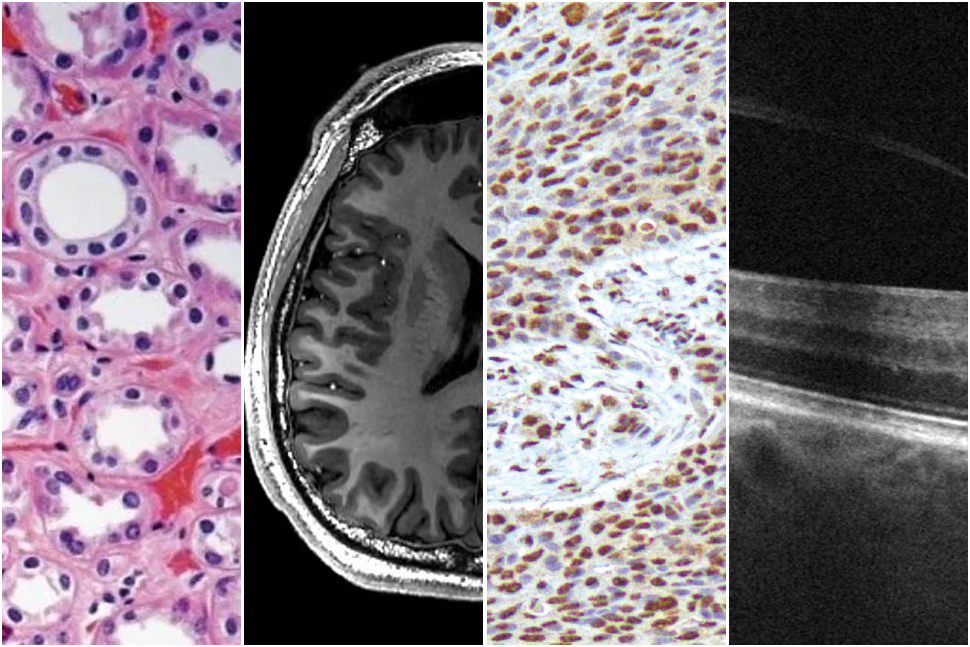
My research is focused on the use of Bayesian modeling and inference to solve different problems related to image restoration and machine learning. I have experience with histology, magnetic resonance images (MRI), and Optical Coherence Tomography (OCT).
Medical Image Enhancement
Improving the quality of medical images using advanced algorithms for better diagnosis.
In most cases, medical images benefit from preprocessing to remove noise and blur, standardize intensity and contrast, or increase spatial resolution. Specific features can also be extracted according to the imaging modality or the pathology of interest. Just as interpreting medical images requires an experienced eye, each type of image also demands tailored preprocessing techniques to reveal its most relevant information.
AI Applied to Medicine
Developing intelligent systems to assist in medical diagnosis and treatment planning.
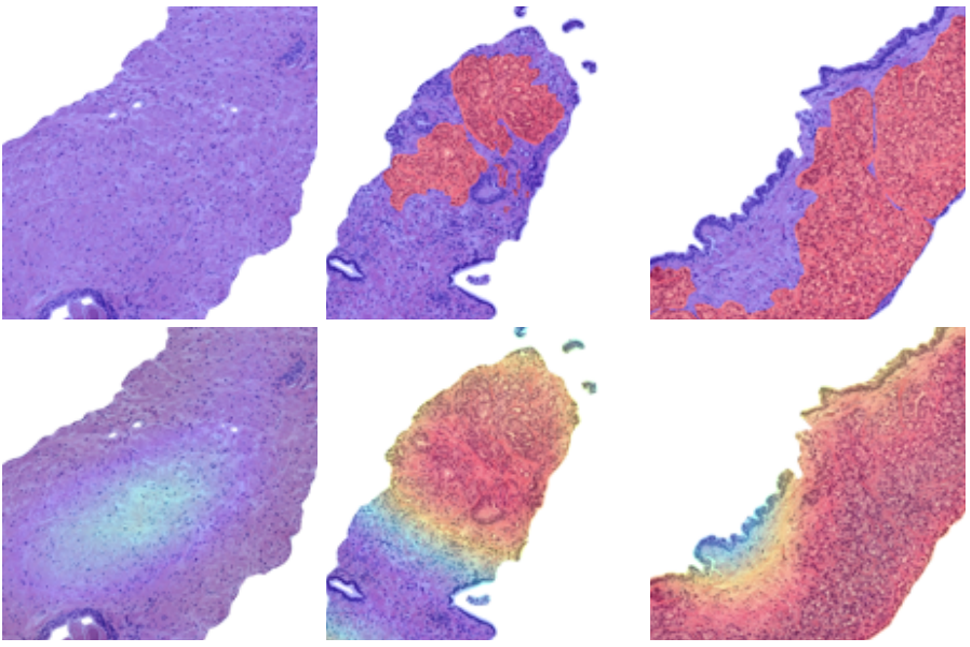
The growing volume and complexity of medical data challenge traditional analysis methods. For example, searching for mitosis in a whole-slide image is like counting red cars across an entire city using Google Maps. Modern imaging requires precise interpretation, yet doctors face limitations in time and consistency. AI provides powerful tools to address these challenges—detecting subtle patterns beyond human perception and improving diagnostic accuracy. Its integration into the medical imaging workflow accelerates analysis and contributes to more objective, reproducible, and personalized healthcare.
Anomaly Detection
Identifying unusual patterns and outliers in data that may indicate a problem.
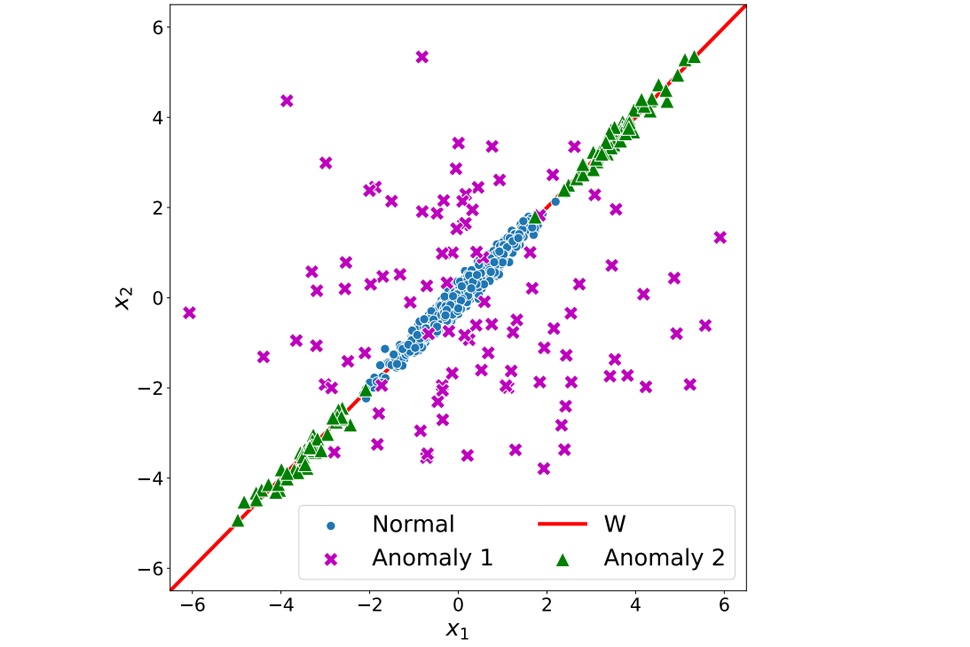
Looking for anomalies can be like searching for a needle in a haystack—but what if you don’t even know it’s a needle? Sometimes, the data itself holds the key to revealing what doesn’t belong. By modeling the expected distribution of the data, we can identify samples that deviate from normal behavior. Anomaly detection can uncover early signs of disease that might be overlooked, highlight differences between patient and control groups, or detect irregularities in cybersecurity and quality control applications.

And Many Others
Research is not only about what has been done, but about what can be imagined and explored.
I have applied AI and computer vision techniques to a wide range of projects, including quality control for printed circuit boards, pansharpening of satellite images, detection of malicious network traffic, swimming ratio estimation, content-based image retrieval, compressive sensing, image generation, and even the intersection of art and biomedicine.
What do you have in mind?